Why “Signs & Symptoms” Content Doesn’t Drive Patient Action
Most “signs & symptoms” content educates patients but doesn’t help them decide when to seek care or take action. Here’s what’s missing in healthcare content.
Wulan
4/21/20268 min read
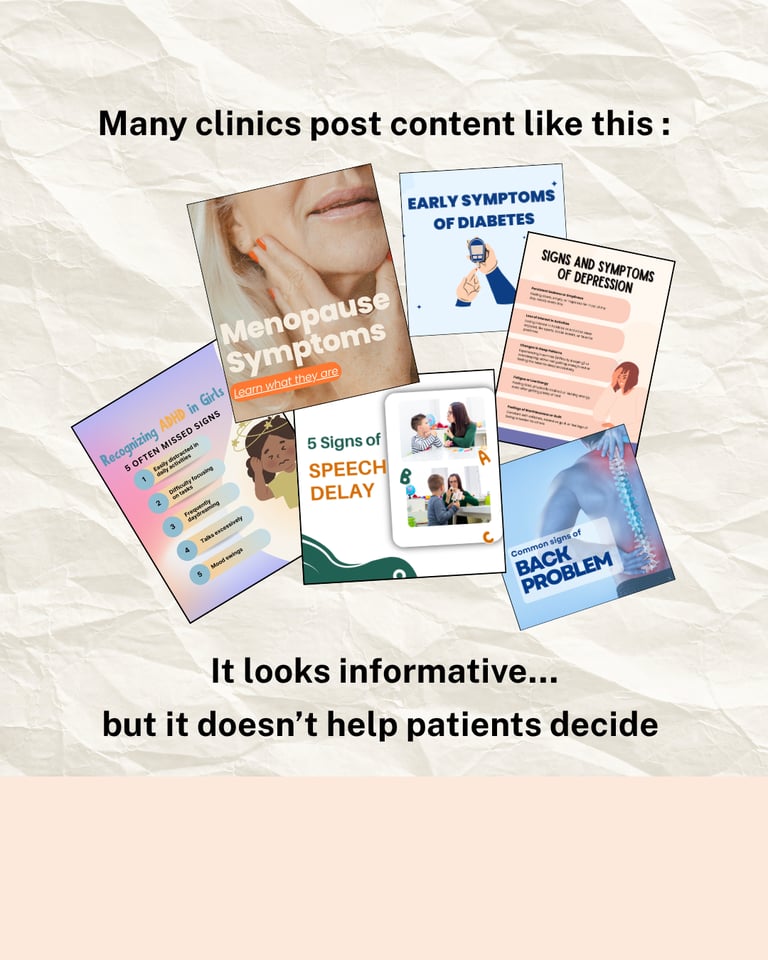
Most clinics regularly publish “signs and symptoms” content to educate patients and demonstrate expertise. While this type of content is informative and helps patients recognize potential issues, it rarely leads to meaningful action.
In many cases, patients read the information but are still left uncertain about what to do next.
Most clinics regularly publish “signs and symptoms” content to educate patients and demonstrate expertise. While this type of content is informative and helps patients recognize potential issues, it rarely leads to meaningful action.
In many cases, patients read the information but are still left uncertain about what to do next.
What Patients Are Actually Trying to Understand
Patients don’t engage with healthcare content the same way they would read general information. Unlike news or advertisements, the stakes are personal - often involving their own health, uncertainty, and potential consequences.
Instead of simply absorbing facts, they are trying to interpret what the information means for their situation and whether it requires action.
When encountering symptoms, patients are often asking themselves whether the situation is serious, whether it applies to them, and whether they should act now or wait.
Psychologically, when people face uncertainty without clear direction, they tend to default to inaction as a way to avoid making the wrong decision.
This creates a layer of hesitation. Even when the information is clear, the decision is not.
What Patients Are Actually
Trying to Understand
Patients don’t engage with healthcare content the same way they would read general information. Unlike news or advertisements, the stakes are personal - often involving their own health, uncertainty, and potential consequences.
Instead of simply absorbing facts, they are trying to interpret what the information means for their situation and whether it requires action.
When encountering symptoms, patients are often asking themselves whether the situation is serious, whether it applies to them, and whether they should act now or wait.
Psychologically, when people face uncertainty without clear direction, they tend to default to inaction as a way to avoid making the wrong decision.
This creates a layer of hesitation. Even when the information is clear, the decision is not.
Where Most Healthcare Content Breaks Down
Most healthcare content is structured to deliver information clearly, but not to guide decisions.
A common format looks like this: symptoms are listed, followed by explanations, and then a general call-to-action.
While this approach is logical from an informational standpoint, it assumes that understanding naturally leads to action.
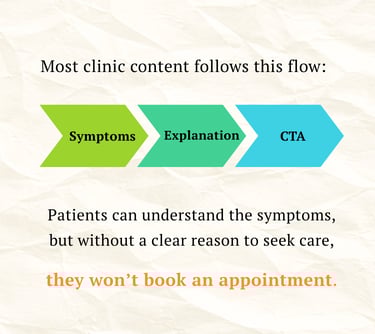
In reality, this is where the breakdown occurs. While the content provides clear information, it does not resolve the patient’s uncertainty around relevance or timing. Patients are left to interpret whether the information applies to their situation and whether it warrants immediate attention.
Understanding symptoms alone is not enough to drive action.
As a result, patients may recognize the symptoms presented, but still hesitate to take the next step.
Where Most Healthcare Content
Breaks Down
Most healthcare content is structured to deliver information clearly, but not to guide decisions.
A common format looks like this: symptoms are listed, followed by explanations, and then a general call-to-action.
While this approach is logical from an informational standpoint, it assumes that understanding naturally leads to action.
In reality, this is where the breakdown occurs. While the content provides clear information, it does not resolve the patient’s uncertainty around relevance or timing. Patients are left to interpret whether the information applies to their situation and whether it warrants immediate attention.
Understanding symptoms alone is not enough to drive action.
As a result, patients may recognize the symptoms presented, but still hesitate to take the next step.
How Patients Actually Make Decisions
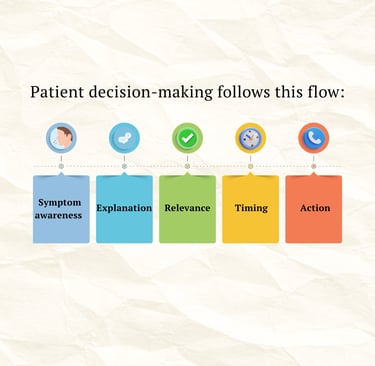
Patient decision-making does not happen in a single step. It follows a progression, where understanding alone is only one part of the process.
In healthcare contexts, decisions are often shaped by perceived risk, uncertainty, and personal relevance. Research in health behavior, such as the Health Belief Model, suggests that individuals are more likely to take action when they perceive a condition as serious, believe it applies to them, and feel that action is necessary at that point in time.
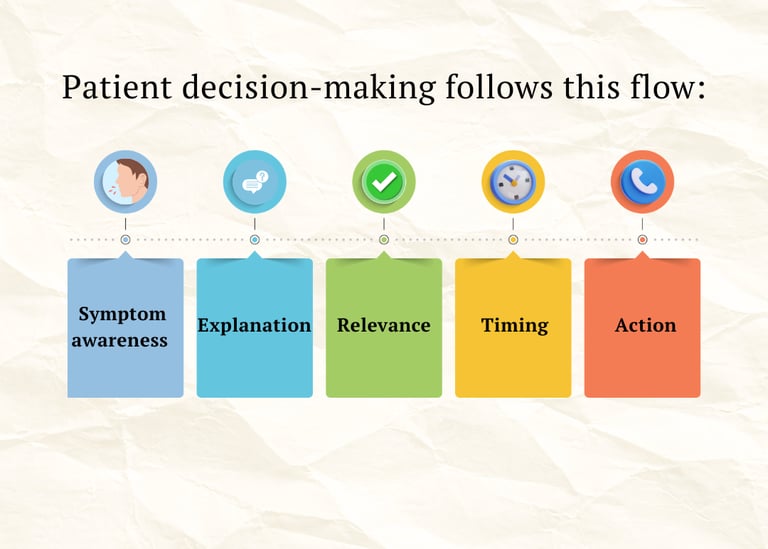
In practice, this means patients move through several stages: from becoming aware of symptoms, to understanding what they might mean, to evaluating whether the situation is relevant to them, and finally determining whether it requires immediate attention.
Only when these questions are resolved does action become a clear and confident next step.
How Patients Actually Make Decisions
Patient decision-making does not happen in a single step. It follows a progression, where understanding alone is only one part of the process.
In healthcare contexts, decisions are often shaped by perceived risk, uncertainty, and personal relevance. Research in health behavior, such as the Health Belief Model, suggests that individuals are more likely to take action when they perceive a condition as serious, believe it applies to them, and feel that action is necessary at that point in time.
In practice, this means patients move through several stages: from becoming aware of symptoms, to understanding what they might mean, to evaluating whether the situation is relevant to them, and finally determining whether it requires immediate attention.
Only when these questions are resolved does action become a clear and confident next step.
What Effective Healthcare Content Does Differently
Effective healthcare content does more than present information. It is structured to support how patients think, feel, and make decisions.
Rather than simply listing symptoms or providing explanations, it connects information to real-life situations that patients can recognize in themselves. This helps them understand not only what the symptoms are, but whether they are relevant to their own condition.
It also addresses the question of timing, helping patients determine whether the situation requires immediate attention or can be monitored. By reducing uncertainty, the content creates clarity around when to take action.
When these elements are in place, content moves beyond awareness and begins to guide patients toward informed and confident decisions.
What Effective Healthcare Content Does Differently
Effective healthcare content does more than present information. It is structured to support how patients think, feel, and make decisions.
Rather than simply listing symptoms or providing explanations, it connects information to real-life situations that patients can recognize in themselves. This helps them understand not only what the symptoms are, but whether they are relevant to their own condition.
It also addresses the question of timing, helping patients determine whether the situation requires immediate attention or can be monitored. By reducing uncertainty, the content creates clarity around when to take action.
When these elements are in place, content moves beyond awareness and begins to guide patients toward informed and confident decisions.
Most healthcare content is designed to inform.
This approach focuses on delivering accurate information and increasing visibility, but often stops short of addressing how patients actually make decisions.
A more effective approach is to structure content around the patient’s decision-making process, not just what they need to know, but how they interpret it, and when they feel ready to act.
This means moving beyond explanation, and designing communication that reduces uncertainty, clarifies relevance, and guides timing.
The result is content that not only informs, but leads to meaningful patient action.
If you’re exploring how to improve how your content supports patient decisions, I’m happy to share a few observations based on your current approach.
A Different Approach to Healthcare Content
Most healthcare content is designed to inform.
This approach focuses on delivering accurate information and increasing visibility, but often stops short of addressing how patients actually make decisions.
A more effective approach is to structure content around the patient’s decision-making process, not just what they need to know, but how they interpret it, and when they feel ready to act.
This means moving beyond explanation, and designing communication that reduces uncertainty, clarifies relevance, and guides timing.
The result is content that not only informs, but leads to meaningful patient action.
If you’re exploring how to improve how your content supports patient decisions, I’m happy to share a few observations based on your current approach.
A Different Approach to
Healthcare Content
A Practical Example: From Informational to Decision-Guiding Content
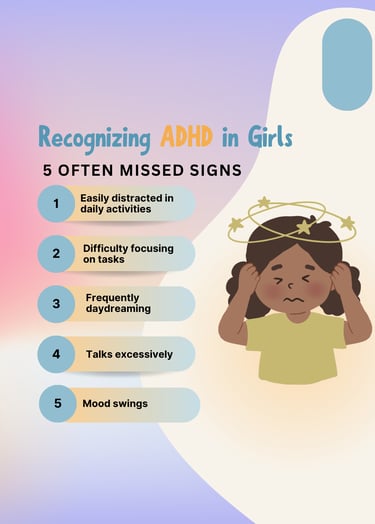
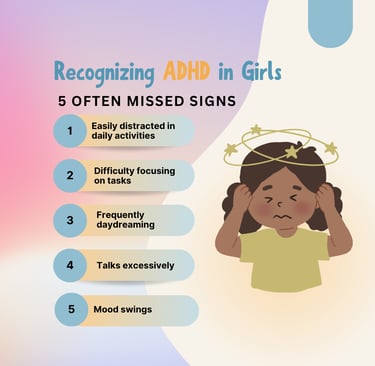
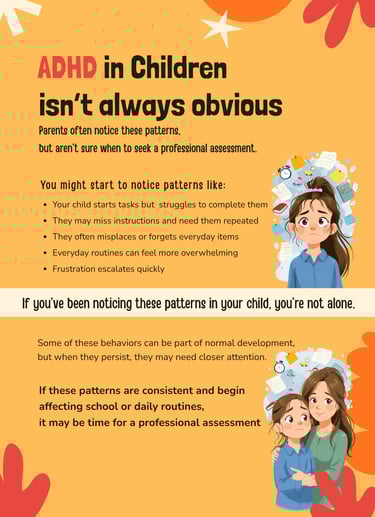
Below is a simple example of how a typical “signs & symptoms” post can be reframed to better support how patients interpret information and decide when to seek care.
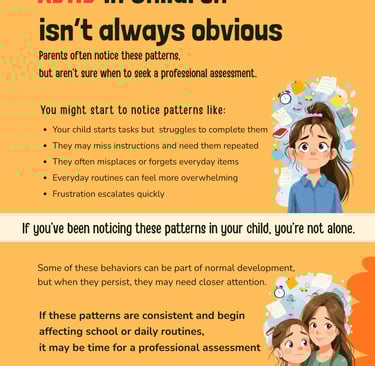
The difference goes beyond presentation, it changes how patients interpret and act on the information.
In typical healthcare content, symptoms are presented clearly, but patients are left to determine on their own whether the information applies to their situation and whether it requires attention. While the content provides clear information, it does not resolve the patient’s uncertainty around relevance or timing.
As a result, patients may recognize the symptoms presented, but still hesitate to take the next step.
In practice, this changes how patients process what they are seeing:
• Reflects real-life situations patients recognize
• Shows understanding of patient concerns and uncertainty
• Helps patients assess relevance to their own situation
• Provides clarity on when to act
The shift is not just in what is said, but in how it reduces uncertainty and guides patients toward action.
This is where content moves beyond awareness and begins to support real patient decision-making.
Typical Content
Decision-Driven Content
Shows understanding of parent concerns
Vague traits → real-life behaviors
Symptoms observable in daily life
Guides when to seek professional care
Reflects real life situations parents recognize
About the Author
Wulan writes about healthcare communication, emotional behavior, and how digital interaction is reshaping patient trust and engagement.
A Practical Example:
From Informational to Decision-Guiding Content
Below is a simple example of how a typical “signs & symptoms” post can be reframed to better support how patients interpret information and decide when to seek care.
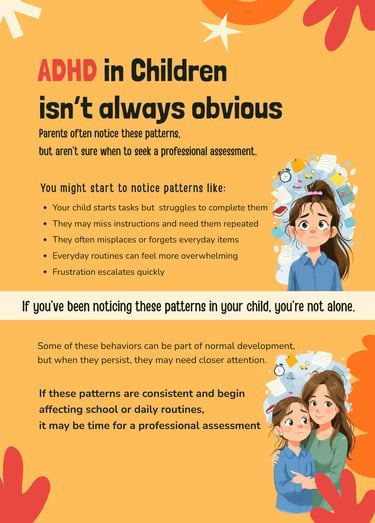
The difference goes beyond presentation, it changes how patients interpret and act on the information.
In typical healthcare content, symptoms are presented clearly, but patients are left to determine on their own whether the information applies to their situation and whether it requires attention. While the content provides clear information, it does not resolve the patient’s uncertainty around relevance or timing.
As a result, patients may recognize the symptoms presented, but still hesitate to take the next step.
In practice, this changes how patients process what they are seeing:
• Reflects real-life situations patients recognize
• Shows understanding of patient concerns and uncertainty
• Helps patients assess relevance to their own situation
• Provides clarity on when to act
The shift is not just in what is said, but in how it reduces uncertainty and guides patients toward action.
This is where content moves beyond awareness and begins to support real patient decision-making.
Typical Content
Decision-Driven Content
Shows understanding of parent concerns
Symptoms observable in daily life
Guides when to seek professional care
About the Author
Wulan writes about healthcare communication, emotional behavior, and how digital interaction is reshaping patient trust and engagement.
Vague traits → real-life behaviors
Reflects
real life situations
Explore how strategic communication can support patient trust, engagement, and digital positioning in modern healthcare.
Interested in healthcare communication strategy?